Greater Manchester Social Value Network Covid-19 Manifesto Launch

Greater Manchester Social Value Network launched its manifesto at an online event on 28th January 2021. The participants came from a wide range of private, VCSE and statutory organisations.  As well as launching the manifesto the event also launched GMSVN’s “Guide to Good Practice in Social Value Relationships”.

The event was chaired by Matt Barqueriza-Jackson (chairperson of GMSVN). The main speakers were: Hazel Blears (Social Value Specialist and Former Secretary of State for Communities and Local Government), Mo Isap (Co-Chair of GM Local Enterprise Partnership), and Rebecca Birkbeck, Director Community & Shared Value, the Co-op) and Andy Burnham (Mayor of Greater Manchester).

As well as speakers there were 5 workshops based on the themes of the manifesto:

  • Cooperation and Brokerage
  • Putting Social Value at the heart of Commissioning and Procurement.
  • Putting Social Value at the centre of Industrial Strategy
  • Profit and Social Impact in Business.
  • Encouraging Positive Environmental Behaviour through Social Value

The discussion and proposals from the workshops are presented in the Conference Report.

You can watch excerpts from the conference:

Good Practice in Social Value Partnerships

GMSVN in partnership with Macc and Manchester Homelessness Partnership have produced a guideline for how to forge successful local partnerships between private and voluntary sectors.

We believe that social value initiatives are most successful when there is a strong partnership between private and voluntary sector organisations. However, we could find little guidance on how to foster and/or broker these relationships at a local level. So, we decided to produce our own. We delayed the publication because of the Covid-19 crisis and launched it at the same time as GMSVN’s new manifesto.

On the 13th March 2020 a diverse group of charities, businesses, and brokerage bodies met to create a good practice list based on their experiences of social value projects. The participants were: Antz, Arup, Manchester Mind, Allied London, Clarke Telecom, Groundwork, Bowmer and Kirkland, Trafford Housing Trust, LFTS, Manchester City Council, Manchester Homelessness Partnership, Mustard Tree, Bruntwood and The Men’s Room.

The top 3 priorities in creating effective social value partnerships identified by participants were:

  1. Creating long-term relationships
  2. Focusing on the cause
  3. Setting clear and realistic goals

The group went on to identify a further set of recommendations under the three headings of: forming relationships; maintaining relationships; and ending relationships.

Post Covid-19 Social Value Manifesto

The Greater Manchester Social Value Network (GMSVN) believes that Social Value should be at the heart of building back a better, fairer and greener Greater Manchester. The purpose of this Manifesto is to identify the means through which this can become reality. The Manifesto is targeted at every organisation in Greater Manchester across the public, commercial and social sectors. 

The Covid-19 crisis has had a significant impact upon organisations across the public, business and voluntary community and social enterprise (VCSE) sectors. It has led to challenges associated with public health, the economy and employment, provision of essential goods and services, and local government finances. It has also happened in an era of global climate emergency.

Many organisations have responded positively to those challenges. Amongst other unforeseen developments, we have seen changes in the behaviour of large corporations as they seek to become more socially responsible. We have seen greater levels of cooperation between organisations across sectors. We have seen increases in cycling and walking, with subsequent health and environmental benefits. And we have seen a growth in citizen activism and desire amongst communities to make a change to our places.

All of these things are what we would broadly define at the Greater Manchester Social Value Network (GMSVN) as being Social Value. As we move towards recovery, we believe that we should not return to the old ways, but that these aspects of Social Value should be harnessed further and accelerated. We believe that Social Value lies at the heart of recovery and reform locally, in a rebuilt Greater Manchester, and at Government level.

However, in order to enable Social Value to continue apace, we need change in how we govern, in how we legislate, and in how we behave. We need:

The public, commercial and social sectors to work together for the common good (Cooperation)

Historically, organisations across the public, commercial and vcse sectors have not worked that well together and the relationship where there has been one, has often been framed by competition. Partnership has often felt to have been forced with resource attached to it. A more resilient Greater Manchester economy will need to be framed by cooperation across sectors and people, and whereby all partners have an equal voice and role. Effectively, we need behaviour change with everybody working together for the common good.

Ways of bringing the public, commercial and social sectors together (Brokerage)

In order for the public, commercial, and social sectors to work together for the common good, we need ways of enabling it to happen – brokerage. All too often organisations within sectors have worked in silos, and sectors have not engaged with other sectors. Better brokerage is required that enables networks, funding, infrastructure and cross-sector working.   

To put Social Value at the heart of Commissioning and Procurement

Over the last ten years, Greater Manchester has been at the forefront nationally of practice around Social Value Procurement. However, there is recognition that despite this, policy and practice is not as mature as it should be. We need to progress Commissioning further and this means a duty that builds Social Value across the whole cycle of Commissioning and Procurement. It needs to become a key component of thinking and decision-making at national, city-regional and local levels; and a requirement as opposed to a consideration.

Economic Development to think socially

The classic approach to Economic Development in recent years has been focused upon physically regenerating our city centres and hoping that the benefits are spread to wider areas and communities. This approach is likely to be at the forefront of economic recovery planning and strategy making. In Greater Manchester, we however think that we need a different approach and one where Social Value sits at the centre of Industrial Strategy. We need enhanced Community Wealth Building.

Further Devolution

Greater Manchester has been the forerunner city region for devolved power and resource in recent years. However, the perspective is that not enough has been devolved to this city region as of yet. We need a deepening of Devolution in Greater Manchester over a broader set of thematic responsibilities, such as work and skills; with accompanying control over funding; and the ability to set Greater Manchester level regulations.

Positive environmental behaviour filtering through everything

Prior to the Covid-19 crisis, Greater Manchester was characterised by high levels of carbon emissions and associated poor air quality. Whilst some organisations had started to change behaviour, the crisis has evolved plans around public transport, and space for cycling and walking, amongst other things. Social Value in public procurement has tended to focus on economic benefits. The Covid-19 crisis has once again shown the critical importance of environmental factors. We need this momentum around positive environmental behaviour to continue and be a central part of the Social Value that organisations are seeking.

Better business

Over many years some businesses have been successful in attracting Government money, inward investment tax breaks, business support, and procurement contracts; despite having unenviable and undesirable business practices. We need to create an environment in Greater Manchester where these types of businesses are not welcomed. We need business to meet a certain set of conditions to undertake work in Greater Manchester, and particularly around employment practices, effectively a social license to operate for public good. We also need legislation which requires businesses to include community benefits and social purpose within their articles of association.

GMSVN was set up in 2015 to evolve the Social Value agenda in Greater Manchester. We had a vision that Social Value should be at the heart of everything that Greater Manchester does, whether that be the contents of the GM Strategy and the activities of the Mayor, the process of procurement, the behaviour of business, or the activities of people. We think that with the adoption of the above ‘needs’ that this vision will be achievable in a post Covid-19 world.
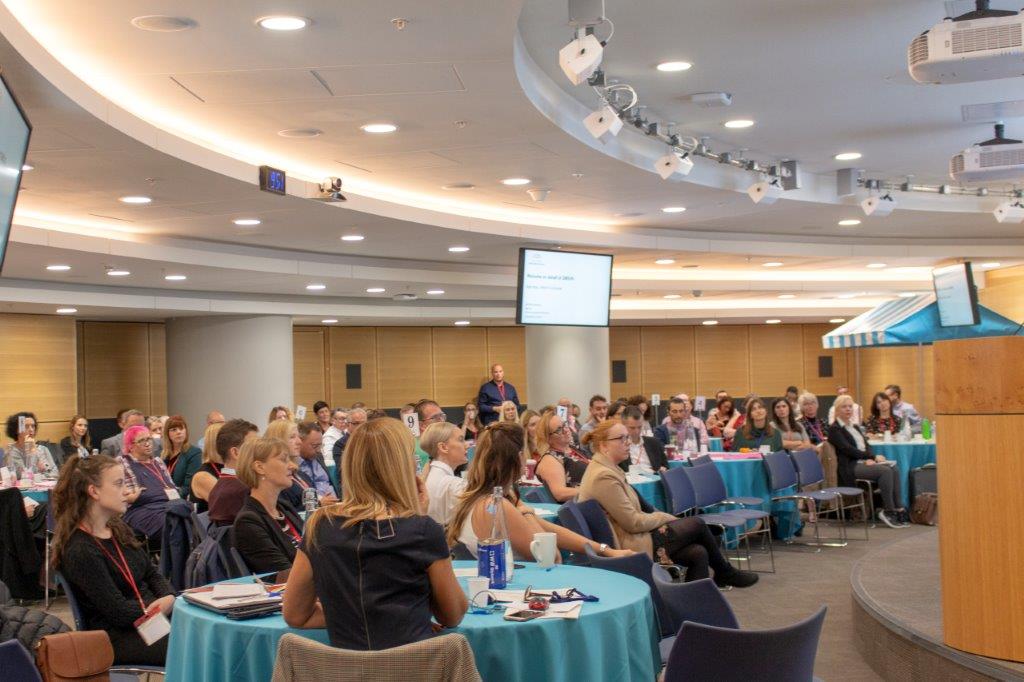
GMSVN Gathering Sept 2019

Room view Key noteOn Sept 10th, we held a gathering for the network on the topic of “How can we make social value part of everything that we do?”. Steve Murrells, the CEO of the Coop group kicked off the event with an inspiring speech, followed by a Q&A with Hazel Blears (former MP and architect of government policy on social value). There were then very lively discussions and further short presentations from organisations about one aspect of their work to increase social value. 119 people attended from a very wide range of organisations and the feedback was extremely positive.
The slides from the presentations can be downloaded Presentation slide deck for the Event v4.0.

The feedback from the table discussions can be downloaded GMSVN conference summary of World Cafe.

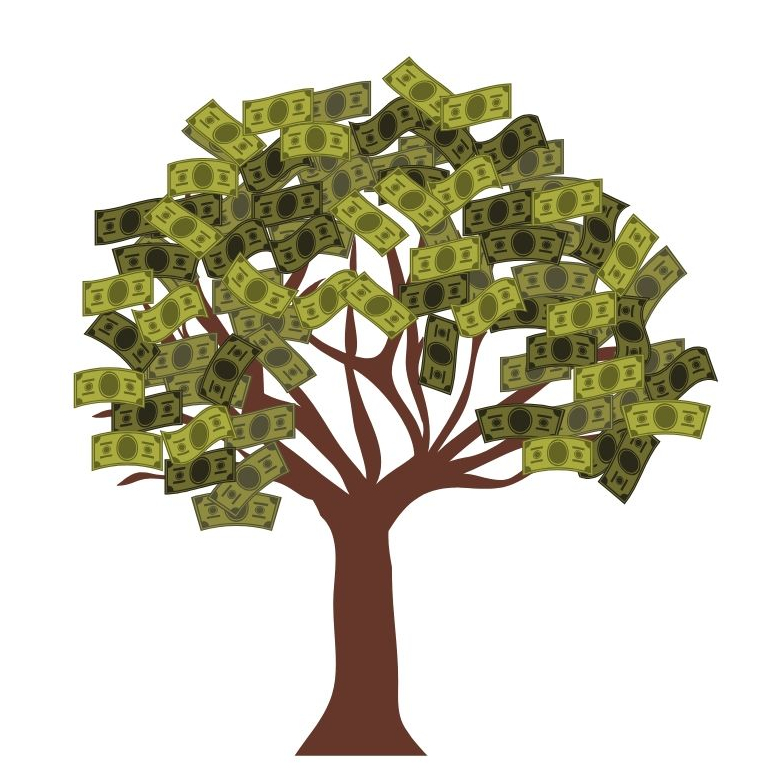
Social Value and the Magic Money Tree

magic money treeI’ve been involved in Greater Manchester Social Value Network since its beginning in 2015. I have been to dozens of meetings about social value, run many workshops, attended a fair few conferences and, despite the efforts of the network and other social value organisations, there is still a lot of basic misunderstanding about some aspects of a social value approach. One of the mistakes I come across frequently is the confusion of social value with “additional” or “on-top” value and that’s what this blog is about.

This idea of additional value is particularly attractive in procurement, as it seems to be same as getting stuff free from the “magic money tree” that beneficent private sector companies nurture. This is just wrong. Social Value is not about getting stuff free, everything that a business does will come out of the contract price in some way. They are not charities, they are businesses and there need to be sound business cases for what they do. If you want charity then it is best to go to an actual charity who do raise additional money, and where effectively procurement agencies often do get free stuff funded from elsewhere (please don’t do this, this is already a major problem for some of the bigger charities who are now expected to subsidise contract price with their own fundraising). Thinking that social value is about additional value has a series of consequences which can be perverse and ultimately damaging to the outcomes that all of us want to see.

Put simply, but powerfully, the overall aim of a social value approach in procurement is to encourage virtuous organisations that have community good at the heart of what they do, and to discourage and not contract companies that don’t. This creates a virtuous circle where there are increasing expectations of organisations in an area. It is not just about social value through procurement, which is a relatively small amount, it is about encouraging lots and lots of “good” organisations doing good in the whole range of things they do including reducing their overall harmful impacts.

For the purposes of this blog and for blatantly rhetorical purposes we are going to take the example of two organisations, Good Inc and Bad Inc and compare and contrast.

Good Inc has, over many years, developed good employment practices, it has a wellbeing policy that offers in-work opportunities for exercise, it has a training policy that encourages in company advancement with a focus on women leaders, it takes on apprentices, from a wide range of backgrounds, at a living wage but only those that they know they can offer good support to. They have long-term ties to a disability organisation that helps them to recruit people with disabilities and to keep staff in jobs. They have a loan scheme for employees that find themselves in debt and are at risk of homelessness. The business, as a whole, does its best across the board and is led by a board who cares about its community impact and attempts to measure it. Overall they have a positive social value.

Bad Inc doesn’t do any of this. It sees social value as another hurdle to get over in winning contracts. It has employed specialist social value consultants to game the system so they can maximise their score on the “social value” question. There is no link between their aims as an organisation which are focused on maximising profit for share-holders and social value outcomes. They do not attempt to measure the overall social value generated by the company, as they know that many of their practices would create negative social value, instead they cherry pick positive things they are doing. It’s not that they do nothing that’s “good” but it’s really not the point of the company. The company has poor employment practices, low diversity including a board made of older white men. It’s a company where profit is the only significant driver.

What happens if Good Inc and Bad Inc apply for the same contract and the procurement agency are using the idea of additional value. Which of the agencies can offer more?

Bad Inc makes a number of strategic offers. It will take on 50 apprentices, it will offer £10,000 in grants, it will employ local people, it will save so many tons of carbon. It offers to help 10 voluntary sector organisations. It offers to make a playground. Nothing wrong with these offers but the only reason they are making them is to win the contract. It’s not built into the way the company runs, it’s effectively a loss leader, a business cost that they’ll swallow in order to get the contract.

Good Inc can’t match that offer, it has a thought through policy on how to employ apprenticeships, it prioritises training and retention of existing staff rather than taking on new staff, it is already working with a number of voluntary sector organisations and doesn’t want to take on more,.  It has made considerable effort to lower its carbon footprint. Its policy around social value is to build on its own social value objectives and incorporate them into every contract as they think this is more efficient and effective.

Simply put the consequence could be that a procurer who believes in the “free stuff” model rewards Bad Inc for its poor social value performance and penalises Good Inc. The procurer sees itself as maximising the return for their community by extracting the biggest social value because Bad Inc has offered more but they have failed to weigh that against the unmeasured negative social value of Bad Inc. Rather than maximising overall social value they are operating a system that minimises it. No-one meant to, but that is the consequence. The focus on additionality rewards new things that people are offering and penalises what organisations are already doing. On the surface it might appear to offer a level playing field, a phrase often used in procurement, but it can only pretend to do this by excluding any activities that are not specifically part of the tender.

To be clear, I am not making an argument for the status quo, that Good Inc should stay as it is and not develop. I am making the opposite argument. Development based on evidence of the good work that Good Inc is already doing has much more chance of succeeding than the “cheap” offers of Bad Inc. Let us value the Good Incs of this world and discourage the Bad Incs until we get to the situation when, hand on heart, we can say that all the organisations that we procure do more good than bad.

Nigel Rose

Coordinator GMSVN and Strategic Lead, Macc


GMSVN NEWSLETTER – Aug 2019

The GMSVN Newsletter Aug 2019 Final includes items on:

  1. Workshop at SVUK Inspiring Impact Roadshow in Stockport.
  2. Great Places Housing Group (GPHG) Facilities and Estates Management Team.
  3. Manchester Town Hall
  4. Social Value’s Growing Importance amongst UK Public Procurement Professionals.
  5. Fusion21 and Knowsley Council Partnership Benefits Local Communities.
  6. Sole Traders as a Source of Social Value.
  7. Social Audit Gathering – 16th October – Birmingham..
  8. Disability Confident Business Networking Event – 13th September – Manchester.
  9. Understanding Social Value – 18 September – Manchester.
  10. A Bite Sized Look at Social Value – 7th October – Bolton.
  11. Launch of the Greater Manchester Good Employment Charter.
  12. Trafford Housing Trust Social Investment Fund.
  13. Bolton Social Value Partnership.
  14. The Greater Manchester Housing Providers Social Value Group.
  15. The Role of the NHS as an Anchor Institution.
  16. Bolton Family.

Further Developing the Greater Manchester Social Value Network

Four years ago, a small group of people with an interest in Greater Manchester, its people and Social Value developed the Greater Manchester Social Value Network (GMSVN). Constituted on a voluntary basis, the Network has sought to draw together the public, commercial and social sectors to put Social Value at the heart of everything which Greater Manchester does:

  • We want Social Value to be embedded in our Mayor’s Economic Strategy;
  • We want Social Value to be considered in every procurement exercise undertaken by our public sector;
  • We want Social Value to grow into the culture of businesses of all sizes and in all sectors;
  • We want Social Value to benefit and be delivered by our Voluntary, Community and Social Enterprise sector organisations.

Continue reading “Further Developing the Greater Manchester Social Value Network”

Social value in GM: lessons learned

A review of Greater Manchester’s history of adopting social value policy and lessons learned as a result.

Peter Schofield, GMSVN steering group member and Greater Manchester Combined Authority (GMCA) collaborative procurement programme manager has written this blog for Public Sector Executive.

You can read the article on the PSE website.

The Social Value Percentage – why a tiered approach will give the best result

One of the issues of great debate since the Social Value Act came into place has been the ‘Social Value Percentage’ – how much weighting to give social value in a tender situation. The Greater Manchester Social Value Network (GMSVN) has drawn upon our collective learning and cannot advocate a blanket approach or one single percentage figure for social value in all contracts. For us, one percentage definitely doesn’t fit all.

GMSVN exists to support learning, sharing experiences, allowing debate and building an evidence base for policy-making. GM is seen as a leader in social value; we have an award-winning city-region Social Value Policy, Salford’s 10% Better campaign, Manchester City Council’s Social Value toolkit, Oldham’s Social Value Charter and the Wigan Deal, for example.

But this success has not been achieved without overcoming a huge number of hurdles. Collectively, we have done and re-done, written and re-written; constantly testing, evaluating and learning from our experiences of what is really working well.

Since 2014, GM has applied social value beyond the confines of the Social Value Act. Analysis across goods, works and service contracts shows:

Goods: specifications are concise, the product is clear and price is highly weighted. Social value scoring should be more about the ‘added value’ that can be brought by the best ‘local, social and ethical’ provider.

Works: with works contracts there is much to be gained from ‘added (social) value’; local opportunities for employment, skills and work experience, local supply chains, and investment in local civil society, for example. Environmental measures often have high industry standards and can be part of the core specification.

Services: with services contracts, the position is more complicated. Many outcomes which could be ‘social value’ in goods or works contracts could also be the focus of the services and therefore be contained in the core specification. In some cases, so much that there is little left over to be ‘added social value’, and we have found several examples of confusion and double counting between the core specification scored under quality, and the additional social value score in a tender situation.

We also know that from a commissioner’s point of view, the higher the social value percentage in a tender, the less control that a commissioner probably has over the actual social value offer. Despite a comprehensive GM-wide Social Value Procurement Policy, which guides providers into 6 key objectives, the ‘offer’ from providers is extremely variable. In fact, the social value that is obtained from contracts depends greatly on what the market is prepared to offer. Therefore, the higher the social value percentage in the contract, the more that the result is dependant upon what providers are prepared to give and not necessarily on what would actually be valuable.

Key proponents of the Social Value Act have always advocated including social value in the core specification for any contract. Mark Cook of Anthony Collins Solicitors writes

Contracting authorities that ensure social value requirements relate to the subject matter of the contract will benefit from being able to assess those requirements as part of the tender evaluation.’ [1]

Our evidence shows that:

  • The overall quality score in a tender situation is higher than any social value percentage, so having social value in the core specification means that this is more likely to influence the final decision, and more likely to be managed and delivered effectively
  • If social value is in the core specification, a commissioner / procurer gets to better define what social value is ‘relevant and proportionate’ to the contract in hand (rather than being dependent on what the contractor is prepared to offer)
  • With social value in the core specification, there’s a great chance of obtaining value for money or a return on investment

Taking in all this learning and debate, GMSVN therefore would propose that good commissioning might involve dialogue with the market in advance of any tender action, to determine what social value might be ‘relevant and proportionate’ and therefore suitable for inclusion in the core specification.

AND based on market testing and the opportunity to include social value in the core specification for different contract types, it would then involve a tiered approach to the ‘additional’ social value percentage. An illustration of this might be:

  • Goods contracts: 10 – 20%
  • Works Contracts: 10 – 15%
  • Services contracts: 5 – 10%

In practice, the core specification of a construction (works) contract could/should contain social value elements such as commitment to providing jobs, apprenticeships, paying Living Wage, etc.  Therefore, the weighting of the ‘additional’ social value element might not need to be as high as the 20-30% that many organisations are starting to apply. Instead, the ‘social value’ score might only need to cover the additional activities that providers are ‘prepared’ to give, which are above and beyond the clear commitments that commissioners want to see as a minimum.  By that logic, if the core specification is designed appropriately, the additional Social Value weighting can be lower.

Anne Lythgoe

Greater Manchester Social Value Network, July 2018

[1] https://buysocialdirectory.org.uk/sites/default/files/social_value_and_public_procurement_-_a_legal_guide_-_january_2014.pdf